Computing education research at Virginia Tech
About
What ASCEND stands for — and what we stand for.
Advancing
Support in
Computing
Education for
Novice
Developers
Data Scientists
Designers
Learning Sciences, Cognitive Science & Educational Psychology
We study how learning occurs and develop rigorous psychometric assessments to measure it.
Computing Education Research
CS education is the domain-specific context where we ground our work — the field that shapes our research questions.
Human-Computer Interaction
We study how novices interact with computing systems and build tools to help them succeed.
People
The team behind ASCEND — researchers, educators, and builders.
Principal Investigator

David H. Smith IV
Assistant Professor & PI
Virginia Tech
David directs the ASCEND Lab, where his research focuses on computing education — particularly how novice developers, data scientists, and designers learn to program. His work spans AI-assisted learning tools, automated assessment, and pedagogical approaches for introductory computing courses.
PhD Students Central Summit
S. Moonwara A. Monisha (opens in new tab)
PhD Student
AI-assisted learning and assessment for introductory CS, focusing on databases.

Fariha Anjum Shifa (opens in new tab)
PhD Student
Language barriers and translanguaging in learning to code.
Undergraduate Researchers Roc Noir

Ben Mazurek
Undergraduate Researcher
Code generation-based autograding frameworks.

Vanshika Punekar (opens in new tab)
Undergraduate Researcher
PrairieLearn assessment tools for algorithm comprehension.

Valeria Rosado
Undergraduate Researcher
Visual debugger for program comprehension.

Shriram Anand
Undergraduate Researcher
SPLICE interoperability for Purplex.
High School Researchers Base Camp
Hudson Mitchell-Pullman
High School Dropout, Emergent Ventures
San Francisco, CA
Human–AI interaction in CS education, focusing on end-user programming and behavior-driven specification.
Frequent Collaborators

Paul Denny
Professor
University of Auckland
Computing education and AI in education.

Kaitlin Riegel
Postdoctoral Fellow
University of Auckland
Computing education assessment and pedagogy.

Zihan Wu
Assistant Professor
University of Maine
HCI and educational tools for computing.
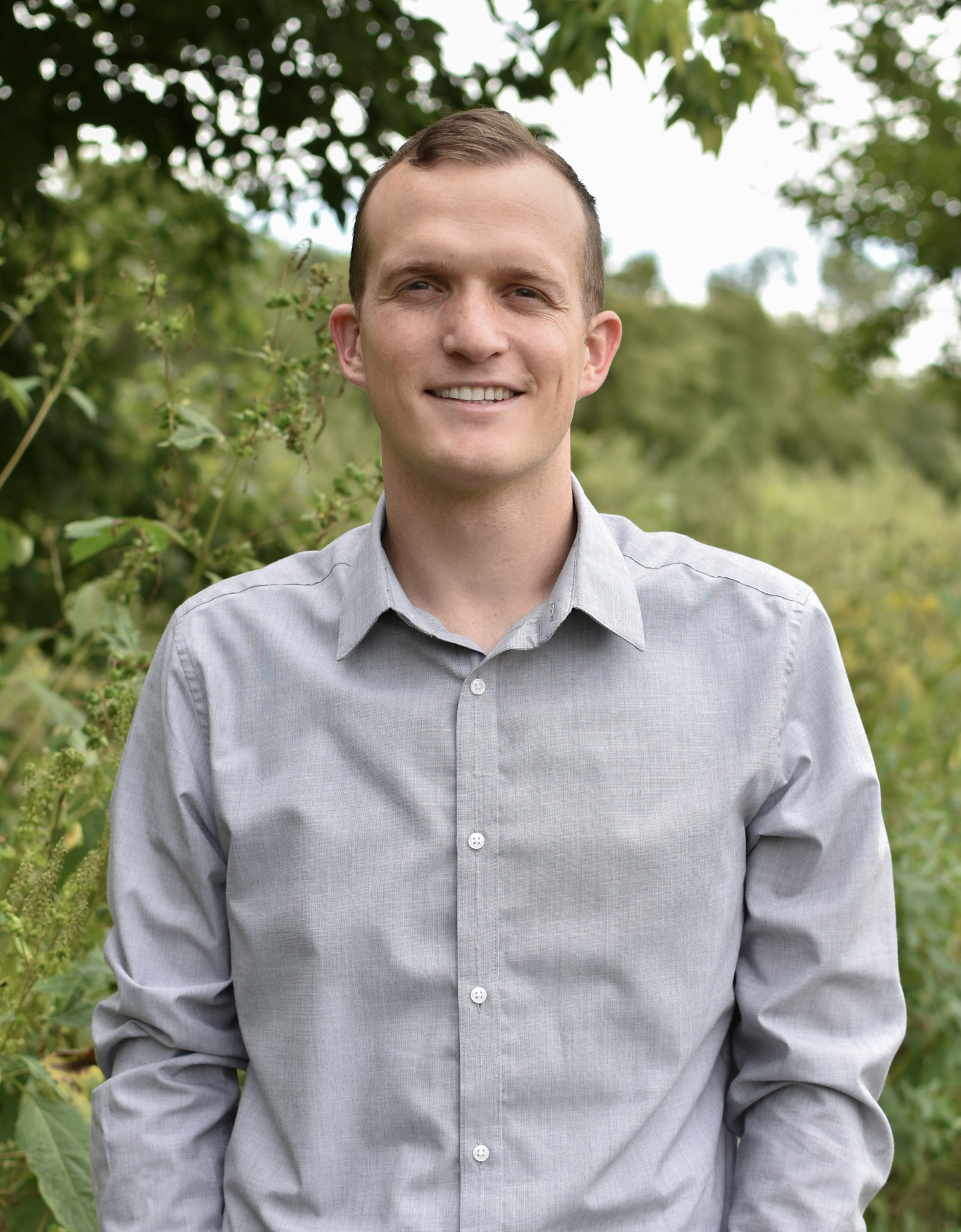
Seth Poulsen (opens in new tab)
Assistant Professor
Utah State University
Software tools for CS education, including Proof Blocks.
Max Fowler
Teaching Assistant Professor
University of Illinois
Computer-based assessment, isomorphism, and EiPE.
Research
Our research spans the intersection of artificial intelligence, computing education, and human-computer interaction.
Configurable AI-Assisted Learning Interfaces
Designing and building configurable AI-powered interfaces that support personalized learning in computing education. This work explores how large language model applications can foster adaptive learning environments and reimagine the role of teachers in AI-enhanced classrooms.
Researchers

Automated Assessment
Developing and evaluating automated grading systems for programming assignments, including code generation-based autograding frameworks. Our goal is to provide students with timely, actionable feedback while reducing instructor workload.
Researchers
Effective and Fair Randomized Computer Based Assessment
Investigating methods for designing randomized computer-based assessments that are both effective at measuring student understanding and fair across diverse student populations. This research addresses how randomization strategies impact assessment validity and equity.
Researchers
Interactive Database Learning
Designing and studying interactive, AI-assisted systems to support students' learning and assessment of database concepts in introductory computer science. This work sits at the intersection of computing education research, human-computer interaction, and AI.
Researchers
Behavior-Driven Specification for AI-Assisted Programming
Designing pedagogy and tooling for behavior-driven specification, where students learn to elicit and probe system behavior through end-user scenarios. As natural language closes the gap to code, this work prepares novices to take on the consolidating role of the AI-assisted programmer.
Researchers
Multilingual Computing Education
Investigating how language diversity impacts learning to code. Using translanguaging theory, we explore how non-native English speakers draw on their full linguistic repertoire to make sense of programming concepts and technical vocabulary.
Researchers
Interested in our research?
Join the labProjects
Tools, systems, and studies we're building and running.
EiPLGrader
A code generation-based autograding question framework that leverages large language models to automatically generate and evaluate programming assessments.
Purplex.org
Coming soon.
News
Publications, talks, grants, and lab announcements.
Slides from the fall kickoff of the ASCEND Undergrad Research Studio — how the weekly studio session works, the five projects recruiting this semester, and how to sign on through the site.
Slides from David's talk at IT-vest, "Code-generation Based Grading: EiPL and Prompt Problems" — scalable, formative practice for prompting and code comprehension, where students' natural-language responses are turned into code and run against unit tests.
David gave a talk at the LearnLab CER Summer School on how generative AI has disrupted traditional CS assessment — item generation, testing strategies, GenAI grading, and where the field goes from here.
Paper Title: Print(“¡Hola!”, “েকমন আেছন?”, “안녕”): A Systematic Review of Translanguaging & Language Mixing in CS Education. Congrats to Fariha Anjum on the first paper of her PhD!!
Paper Title: Exploring the Design Space of LLM-Based Programming Support in CS Education: A Scoping Review through the Lens of Assist. Congrats to Minsun Kim on the first publication of her PhD!!
A 19k SPLICE mini-grant accepted to build datasets of student submission to natural language programming activities and adapt Purplex to SPLICE's interoperability standard.
Wrote a Medium article about a recent research trip to India, giving a series of talks on our Programming in Plain Language work across several universities.
David has been appointed as an affiliate faculty member of the Department of Engineering Education at Virginia Tech.
David has been appointed as an affiliate faculty member of the Center for Human-Computer Interaction (CHCI) at Virginia Tech.
David has officially started his position as Assistant Professor in the Department of Computer Science at Virginia Tech.
Presented two papers at ITiCSE 2025 in the Netherlands. One was nominated for the conference's Best Paper Award.
David and collaborator Paul Denny have been awarded a Llama Impact Grant to pursue work on EiPL questions and Prompt problems.
David has joined ACM Transactions on Computing Education as an Associate Editor.
David successfully defended his dissertation "Discovering, Auto-generating, and Evaluating Distractors in Parsons Problems in CS1".
David has accepted a tenure-track Assistant Professor position at Virginia Tech in the Department of Computer Science starting Fall 2025.
Two papers on EiPL questions accepted to ITiCSE 2025: "ReDefining Code Comprehension" and "Counting the Trees in the Forest". Pre-prints available on arXiv.
Our paper "Exploring Student Reactions to LLM-Generated Feedback on Explain in Plain English Problems" was accepted to ACM SIGCSE 2025.
Visited University of Toronto St. George and Mississauga to give a talk on "Explain in Plain Language Questions".
Our paper "Explain in Plain Language Question with Indic Languages" was accepted to COMPUTE 2025 and is available on arXiv.
Invited to Dagstuhl Seminar 25311 on "Generative AI is Programming Education".
Join the Lab
We're always looking for curious, motivated researchers.
$ ascend --recruit
Searching for researchers who are passionate about computing education...
Ideal candidates: curious thinkers, careful builders, strong communicators.
Required dependencies: motivation, creativity, willingness to learn.
✓ Positions available. See below.
PhD Students
We are recruiting PhD students interested in computing education research, particularly at the intersection of AI, HCI, and pedagogy. PhD students in the ASCEND Lab typically work on designing and evaluating educational tools, conducting empirical studies, and publishing at top venues like ICER, SIGCSE, and CHI.
Ideal candidates have a background in computer science, learning sciences, or a related field, and are excited about improving how people learn to code.
Master's Students
Master's students work on focused research projects that contribute to ongoing lab efforts. This is a great opportunity to gain research experience, develop technical skills, and contribute to published work in computing education.
We especially welcome students interested in LLM applications for education, educational tool design, or empirical education research.
Undergraduate Researchers
Undergrads contribute to real research projects — building prototypes, running studies, analyzing data, and more. No prior research experience required, just curiosity and commitment.
This is especially valuable if you're considering graduate school or want to explore computing education as a field.
How to Apply
- 1. Check out our research areas and projects to find topics that interest you.
- 2. Read a few of David's recent publications to understand our approach.
- 3. Send an email to dhsmith4@vt.edu with:
- A brief introduction and why you're interested in the lab
- Your CV or resume
- Any relevant coursework, projects, or research experience
- Which research area(s) interest you most